
Robotic Vacuum Cleaner | Robot Vacuum | Automated Floor Care | Regional Breakdown | April 2026 | Source: WGR
Robotic Vacuum Cleaner Market
Key Takeaways
-
Robotic Vacuum Cleaner Market is projected to reach USD 52.4 billion by 2035 at a 24.6% CAGR.
-
AI-powered LiDAR navigation and self-emptying bases are the dominant structural growth drivers.
-
Mopping combo robots and smart home integration are gaining traction among busy homeowners demanding hands-free floor care.
-
iRobot (Roomba), Roborock, Ecovacs (DEEBOT), Shark, Dreame, and Xiaomi lead competitive supply.
-
North America leads adoption; Asia-Pacific accelerates through middle-class home automation.
The Robotic Vacuum Cleaner Market is projected to grow from USD 6.2 billion in 2024 to USD 52.4 billion by 2035 at a 24.6% CAGR, driven by the mass-market adoption of AI-powered robot vacuums across residential segments, the expansion of LiDAR and VSLAM navigation into entry-level models, and the proliferation of self-emptying and mopping combo devices that directly reduce manual cleaning time.
Market Size and Forecast (2024-2035)
Segment & Technology Breakdown
What Is Driving the Robotic Vacuum Cleaner Market Demand?
-
Hands-Free Cleaning Demand: Self-emptying bases extend operation from 1-2 days to 4-8 weeks, with consumers reporting 90% reduction in manual vacuuming frequency and robot ownership satisfaction exceeding 85% for premium models.
-
LiDAR Navigation Advancement: Precision mapping and room selection enable targeted cleaning (e.g., “clean kitchen only”), with LiDAR-based robots achieving 95%+ coverage and 50-70% faster cleaning than random-bump models.
-
Mopping Combo Adoption: 2-in-1 vacuum/mop robots appeal to hard-floor households, with combo units representing 40-60% of premium sales and commanding 20-40% higher ASP than vacuum-only models.
-
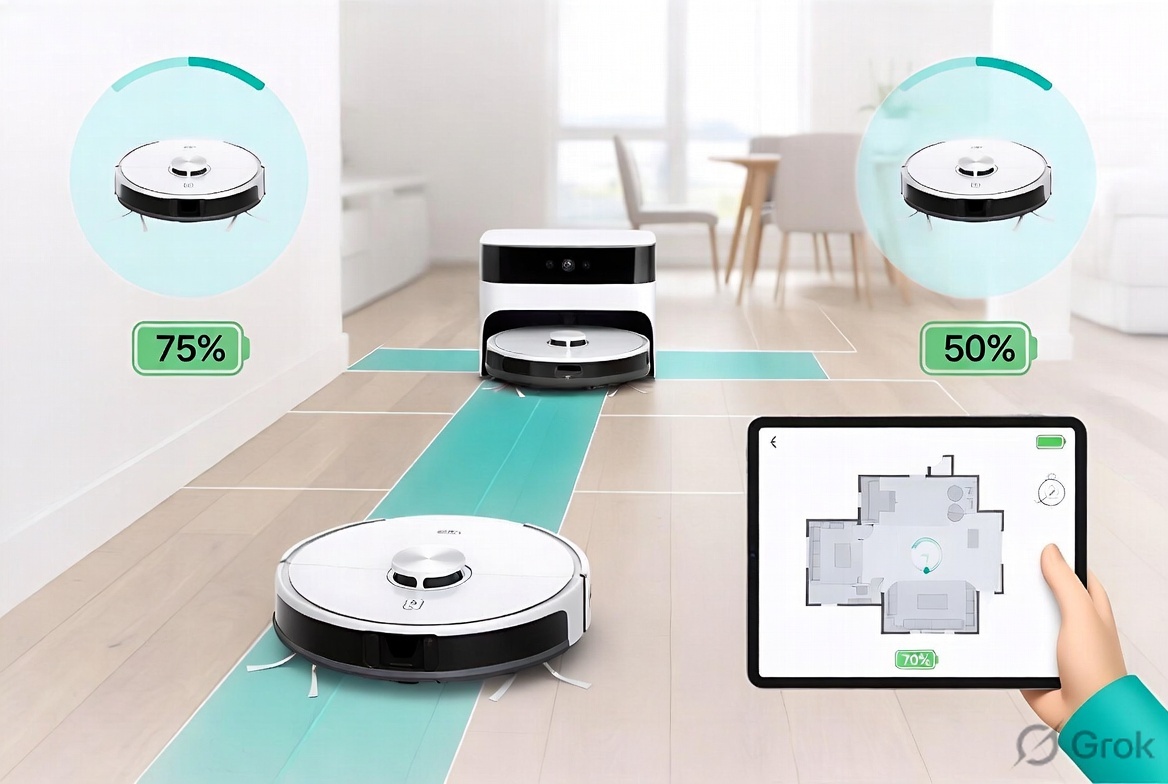
Smart Home Integration: Voice control (Alexa, Google Assistant), app scheduling, and integration with smart displays (e.g., view camera, send robot to specific room) increase user engagement and ecosystem stickiness.
KEY INSIGHT
Households deploying LiDAR-navigated robot vacuums with self-emptying bases report 95% reduction in manual vacuuming time and 2x higher cleaning frequency compared to traditional vacuums, with 80%+ of premium owners stating they would not return to manual-only cleaning.
Get the full data — free sample available:
→ Download Free Sample PDF: Robotic Vacuum Cleaner Market
Includes market sizing, segmentation methodology, and regional forecast tables.
Regional Market Breakdown
Competitive Landscape
Outlook Through 2035
LiDAR navigation standardization, self-emptying ubiquity, and mopping integration will define the robotic vacuum cleaner market through 2035. Vendors investing in object avoidance (cables, pet waste), base station maintenance (wash/dry mops), and multi-floor mapping will capture the highest-margin premium consumer contracts as robot vacuums transition from novelty appliance to essential household chore automation.
Access complete forecasts, segment analysis & competitive intelligence:
→ Purchase the Full Robotic Vacuum Cleaner Market Report (2025-2035)
*10-year forecasts | Segment & application analysis | Regional data | Competitive landscape | 200+ pages*
Keywords: Robotic Vacuum Cleaner | Robot Vacuum | LiDAR Vacuum | Self-Emptying Robot Vacuum | Mopping Robot | Smart Home Cleaning | Robot Mop | Automated Floor Cleaner
© 2025 WiseGuy Reports (WGR) · All Rights Reserved · wiseguyreports.com
All market projections are forward-looking estimates sourced from WGR’s proprietary research reports and subject to revision.